ホーム

ブログ について Raspberry Pi Launches 43inch Touchscreen for Embedded Projects

認証
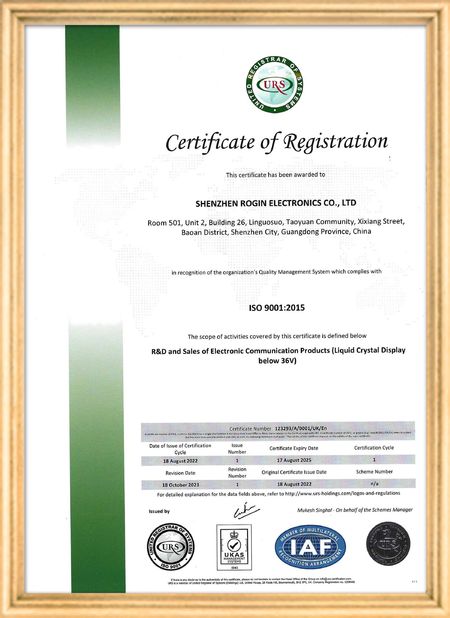
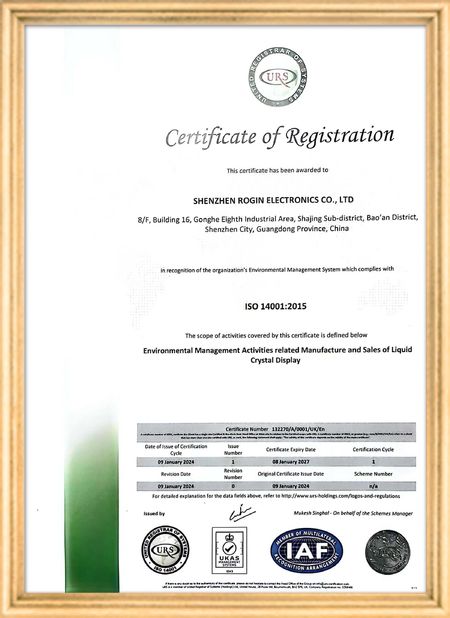
中国 Shenzhen Rogin Electronics Co., Ltd. 認証
顧客の検討
このディスプレイは電車で完璧に動作します.高い明るさ,反輝,そして長期間の振動下で安定しています.乗客はきれいな視界が好きです.

—— カスペル・ソーレンセン

正確な色,迅速な応答,低温の正常な起動. 完全に電車のシステム上の厳しい環境に適合します.

—— ニコール・ベッカー

簡単な設置、広い温度範囲、明るい環境での優れた視認性。これらのディスプレイは、当社の産業機器要件をすべて満たしています。

—— ジョバンニ

この高明るさのLCDは,私たちの産業用制御パネルに最適です. 彼らは直接ワークショップの日光の下でもクリアです..

—— ルカス・ミュラー

オンラインです
会社 ブログ
Raspberry Pi Launches 43inch Touchscreen for Embedded Projects
最新の会社ニュース Raspberry Pi Launches 43inch Touchscreen for Embedded Projects

Have you ever felt constrained by the lack of intuitive interfaces in your Raspberry Pi projects? When seeking to enhance user interaction with DIY electronics, an integrated display with touch functionality becomes an essential solution. This article examines the technical specifications, practical applications, and integration considerations of 4.3-inch LCD touchscreens specifically designed for Raspberry Pi, offering valuable insights for makers, developers, and educators.

Technical Specifications: Understanding the Core Components

The 4.3-inch LCD touchscreen typically employs TFT (Thin-Film Transistor) technology, delivering standard resolutions such as 480×272 pixels—sufficient for most embedded applications. The touch-sensitive layer, available in either resistive or capacitive variants, serves as the foundation for human-machine interaction:

  • Resistive touch: Cost-effective solution supporting various input methods (including glove operation)
  • Capacitive touch: Delivers superior sensitivity and multi-touch capabilities

These displays commonly connect via SPI or DSI interfaces, simplifying wiring and installation by directly integrating with the Raspberry Pi motherboard. Power supply options typically include either the GPIO pins or dedicated USB ports, ensuring straightforward implementation.

Practical Applications: From Smart Homes to Educational Environments

The integration of 4.3-inch LCD touchscreens significantly expands Raspberry Pi's potential applications:

  • Smart home systems: Functions as a centralized control panel displaying environmental data and enabling direct device management
  • Industrial automation: Serves as compact HMI (Human-Machine Interface) for monitoring production data and executing operational commands
  • Educational tools: Provides visual programming platforms for learning interface design and embedded systems development
  • Multimedia projects: Enhances user experience as display and control interfaces for media players

Integration Considerations: Optimizing Project Performance

Successful implementation requires attention to several critical factors:

  • Driver configuration: Ensuring proper OS recognition of display and touch functionality
  • Software development: Utilizing appropriate libraries (Pygame, Qt for Python) for interface design and touch event handling
  • Power management: Optimizing brightness and refresh rates for battery-powered applications
  • Physical installation: Addressing stability, aesthetics, and component compatibility during initial design phases

Challenges and Future Developments

While powerful, these displays present certain limitations including resolution constraints, sunlight visibility issues, and varying touch accuracy. However, ongoing advancements promise higher resolutions, improved outdoor visibility, and enhanced touch sensitivity. Future iterations may incorporate additional sensors or wireless communication modules, further expanding Raspberry Pi's capabilities in IoT and edge computing applications.

パブの時間 : 2026-09-08 00:00:00 >> ブログのリスト
連絡先の詳細
Shenzhen Rogin Electronics Co., Ltd.

コンタクトパーソン: Mr. Kelvin Zhu

電話番号: +86 15919061504

私達に直接お問い合わせを送信 (0 / 3000)